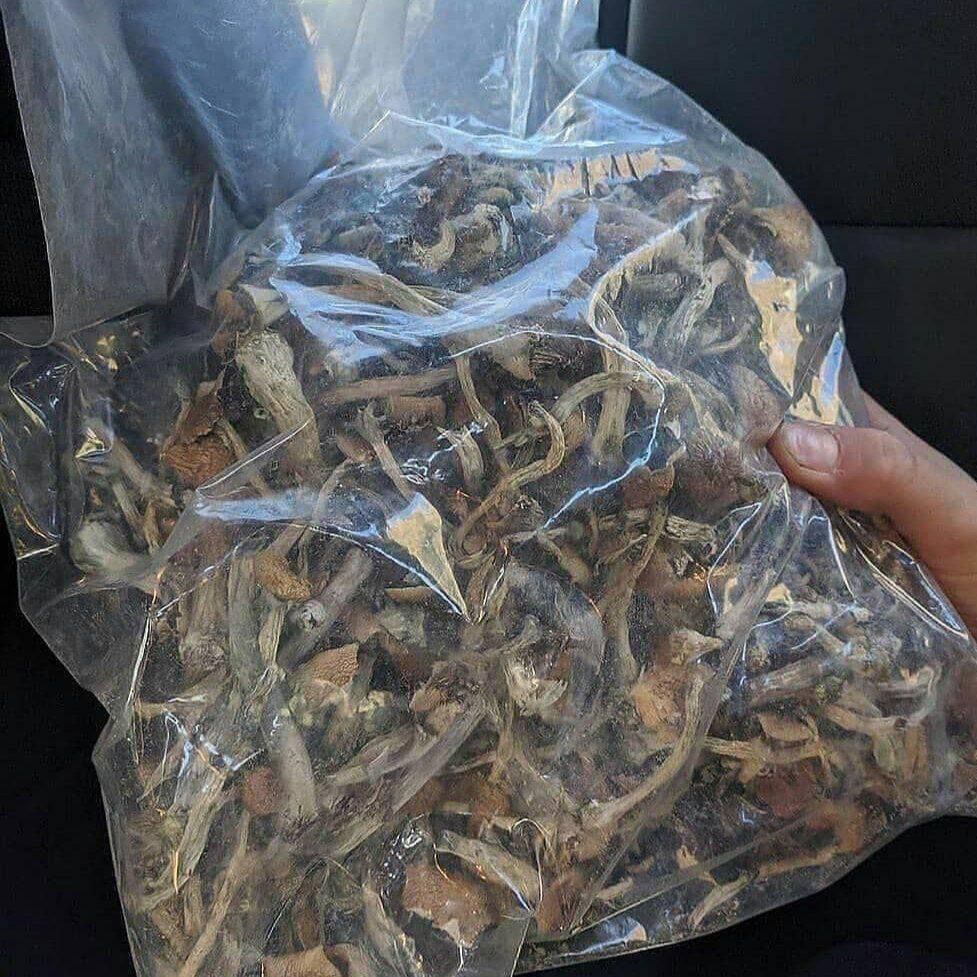
Golden Teacher Mushroom Identification: A Complete Visual Guide
Golden Teacher mushrooms are one of the most popular and recognizable strains of psilocybin mushrooms, prized for their moderate potency and profound psychological effects. Whether you’re a psychedelic therapy patient, a mental health enthusiast, or a mushroom cultivator, accurately identifying Golden Teachers is crucial for safety, quality, and effectiveness.
Shop Golden Teacher Mushrooms Now
Why Is Golden Teacher Mushroom Identification Important?
Misidentifying mushrooms can lead to dangerous or even fatal consequences. Golden Teacher mushrooms have distinct features, but they can be confused with toxic lookalikes. Proper identification ensures you harvest, purchase, or consume the correct strain for your intended use.
For those interested in growing their own, explore our mushroom grow kits.
Key Features of Golden Teacher Mushrooms
1. Cap (Pileus)
- Shape: Convex to broadly convex, flattening with age.
- Color: Golden to light brown, often with a slightly darker center.
- Size: 2–8 cm in diameter, depending on maturity.
- Texture: Smooth and slightly sticky when moist.
2. Gills (Lamellae)
- Color: Pale gray to purple-brown as spores mature.
- Attachment: Adnate to adnexed (attached to the stem).
- Spacing: Moderately close, with a white to grayish edge.
3. Stem (Stipe)
- Color: White to pale yellow, sometimes with a slight blue bruising when handled.
- Length: 4–10 cm tall.
- Thickness: 0.5–1.5 cm.
- Texture: Fibrous and slightly scaly.
4. Spores
- Color: Dark purple-brown (visible in spore prints).
- Shape: Ellipsoid to subellipsoid.
5. Bruising
- Golden Teachers bruise blue when damaged, a hallmark of psilocybin mushrooms.
Golden Teacher Mushroom Lookalikes: What to Avoid
Misidentification can be dangerous. Here are some common lookalikes to avoid:
1. Galerina marginata (Deadly Galerina)
- Danger: Highly toxic, can be fatal if ingested.
- Differences: Smaller, brown cap with a ring on the stem, and rusty brown spores.
2. Pholiotina rugosa
- Danger: Contains toxic compounds.
- Differences: Darker cap, scaly stem, and no blue bruising.
3. Agrocybe praecox
- Danger: Not psychedelic, but can cause gastrointestinal distress.
- Differences: Tan to brown cap, no blue bruising, and lighter spores.
4. Panaeolus cinctulus
- Danger: Mildly toxic, can cause nausea and vomiting.
- Differences: Darker, mottled cap, and black spores.
For safe and legal alternatives, consider microdose capsules or fresh mushrooms.
Step-by-Step Guide to Identifying Golden Teacher Mushrooms
Step 1: Examine the Cap
- Look for a golden to light brown color with a slightly darker center.
- The cap should be convex and smooth, flattening as it matures.
Step 2: Check the Gills
- Gills should be pale gray to purple-brown.
- Ensure they are attached to the stem and moderately spaced.
Step 3: Inspect the Stem
- The stem should be white to pale yellow, fibrous, and 4–10 cm tall.
- Look for blue bruising when handled.
Step 4: Take a Spore Print
- Place the cap on white paper for 12–24 hours.
- Golden Teachers produce a dark purple-brown spore print.
Step 5: Compare with Trusted Sources
- Use field guides, online databases, or expert forums to confirm identification.
For detailed cultivation guides, visit PsyVibe.
Where to Find Golden Teacher Mushrooms
Golden Teachers are not native to the UK but are widely cultivated. Here’s where to find them:
- Online Vendors: Reputable sites like UK Magic Shroom offer dried or fresh Golden Teachers.
- Local Growers: Connect with trusted cultivators in psychedelic communities.
- Grow Kits: Cultivate your own using mushroom grow kits.
Safety Tips for Golden Teacher Mushroom Identification
- Never Consume Wild Mushrooms Without Expert Confirmation.
- Use Multiple Identification Methods: Compare caps, gills, stems, and spores.
- Avoid Lookalikes: Familiarize yourself with toxic mushrooms in your region.
- Start with Small Doses: If consuming, begin with a low dose to test sensitivity.
- Consult Experts: Join mycology groups or forums for guidance.
For legal psychedelic options, explore magic truffles or psychedelic microdose pills.
FAQ: Golden Teacher Mushroom Identification
1. How can I tell if a mushroom is a Golden Teacher?
Look for a golden cap, purple-brown gills, white to pale yellow stem, and blue bruising. Always confirm with a spore print.
2. Are there any dangerous lookalikes to Golden Teachers?
Yes, Galerina marginata and Pholiotina rugosa are toxic. Always double-check identification before consumption.
3. Can I grow Golden Teacher mushrooms at home?
Yes! Use a mushroom grow kit for a safe and easy cultivation process.
4. What should I do if I’m unsure about a mushroom’s identity?
Do not consume it. Consult an expert or mycologist for confirmation.
5. Where can I buy Golden Teacher mushrooms in the UK?
Shop Golden Teacher Mushrooms Now or explore legal alternatives.
Call to Action
Ready to explore the benefits of Golden Teacher mushrooms? Shop Golden Teacher Mushrooms Now or discover our range of legal psychedelic alternatives.
Schema Markup Suggestion
Schema Type: FAQPage and HowTo
This post is ideal for FAQPage schema to highlight the FAQ section and HowTo schema for the step-by-step identification guide.
Social Media Snippet
Facebook/LinkedIn Post:
🌟 Golden Teacher Mushroom Identification Guide 🌟
Learn how to identify Golden Teacher mushrooms safely with this visual guide! Discover key features, lookalikes, and safety tips. Shop now or explore legal psychedelic options. #GoldenTeacher #MagicMushrooms #MushroomID #PsychedelicSafety #UKWellness